The DMV Was the Vibe All Along: In Defense of Aggressive Blandness
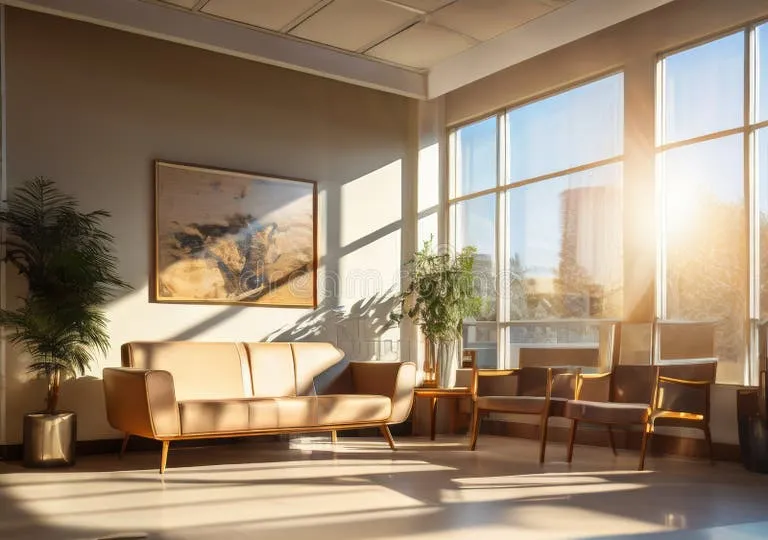
Photo: beige minimalist empty office lobby waiting room, via thumbs.dreamstime.com
Walk into any new luxury apartment building in America and you'll find it: the lobby. Warm wood slats. A feature wall in greige. A plant that is either very expensive or very fake. Pendant lighting calibrated to the exact kelvin of a wellness podcast. And absolutely, aggressively, nothing else.
This is the look young designers are calling, variously, nothing-core, DMV-core, or — my personal favorite, overheard in a Los Angeles group show — "liminal lobbyism." And here's my thesis, delivered with my whole chest: this is not laziness. This is not the death of taste. This is the sharpest cultural criticism of the decade, executed in paint samples.
The Blandness Arms Race
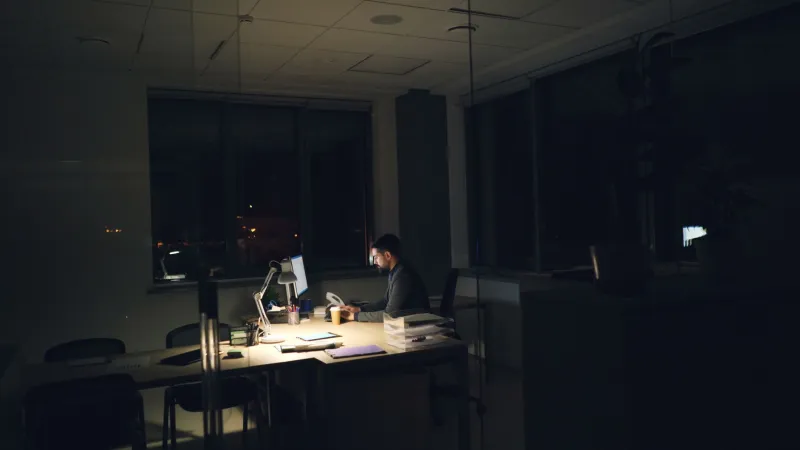
First, the receipts. The aesthetic has been building for years. It's in the infinite beige office lobbies of corporate TikTok, a genre with its own hashtags and millions of views. It's in the rise of "stock-photo core" — art that reproduces the handshake, the thumbs-up, the woman laughing alone with salad, as objects of genuine fascination. It's in fashion's ongoing love affair with the most forgettable garments ever manufactured: the plain tee, the office-parking-lot windbreaker, the shoe that looks like it came with a rental car.
Museums have noticed. Gallery shows built entirely around corporate ephemera, waiting-room furniture, and default settings have moved from the weird internet into legit institutions. What was a shitpost three years ago now has wall text and a catalog. (Saturn Barnola readers saw this coming — the internet's aesthetics have been migrating into the art world for a while now. This is just the beige wing of the migration.)
Minimalism Curdled
Here's the history part. Minimalism was supposed to be a moral position. The Bauhaus, the clean line, less is more — the idea that stripping away ornament would reveal truth and, ideally, a better society. Then capitalism did what capitalism does: it ate the strip-down and sold the absence back to us. Minimalism became an Instagram feed, a capsule wardrobe, a decluttering memoir, a mortgage-friendly interior palette. "Less is more" became "less is a price point."
Nothing-core is what happens when a generation raised inside that contradiction stops fighting it and starts pointing at it. If every space is designed, why not design the space designed to feel undesigned? If the default is everywhere, the default becomes the subject. The beige lobby isn't an accident anymore — it's a readymade. Duchamp signed a urinal; Gen Z is signing a waiting room.
The Uncanny Valley of the Office Park
The reason this stuff hits is that it's genuinely uncanny. Corporate blandness was engineered to be invisible — to reassure without registering, to signal competence while communicating nothing. But reproduce it deliberately, in an art context, and it stops being invisible. It becomes eerie. A fake office lobby in a gallery feels like a memory you're not sure you had. The stock photo, isolated and enlarged, reveals itself as the strange, sad, deeply American artifact it always was: a photograph of an emotion, taken by no one, for everyone.
That's the trick nothing-core pulls, and it's why I'll defend it against the "this is just boring" crowd: it makes the invisible visible. The most powerful design in your life is the design you've never once thought about — the airport carpet, the bank branch, the app that looks like every other app. Young artists are doing to corporate aesthetics what Warhol did to soup. The soup was always the point.
The Take I'll Defend in the Replies
Now the spicy part, because this is an opinion piece and I promised my editor a take: nothing-core is the most politically legible art movement of the year. Not the loudest, not the prettiest — the most legible.
Think about what the aesthetic actually documents. A country where public space has been hollowed out and replaced with branded environments. Where the third place became the lobby of your apartment building, where the waiting room is the shared experience left. Young people didn't invent the beige — they inherited it, and they're holding it up to the light like a specimen. This is documentary work. The blandness was already here. They're just the first ones to stop pretending it isn't.
The counterargument, which I've heard at approximately four gallery openings and one Thanksgiving, is that aestheticizing corporate emptiness is surrender — that making the DMV into art means accepting the DMV as fate. Fair. But every art movement that engages with the dominant visual culture gets that accusation, and every one of them, from pop art on, turned out to be doing something more interesting: holding a mirror at an angle that makes you flinch.
So the next time you're standing in a beige lobby, waiting for a name to be called, look around. The slat wall. The lighting. The stock photo of a diverse team pointing at a laptop. Somebody made all of that, deliberately, to make you feel a certain way.
Nothing-core's whole project is making sure you finally notice how it made you feel.
That's not boring. That's the loudest thing in the room.