Sounds Nobody Recorded on Purpose: How Field Recordings Became Indie Music's Most Obsessive Rabbit Hole
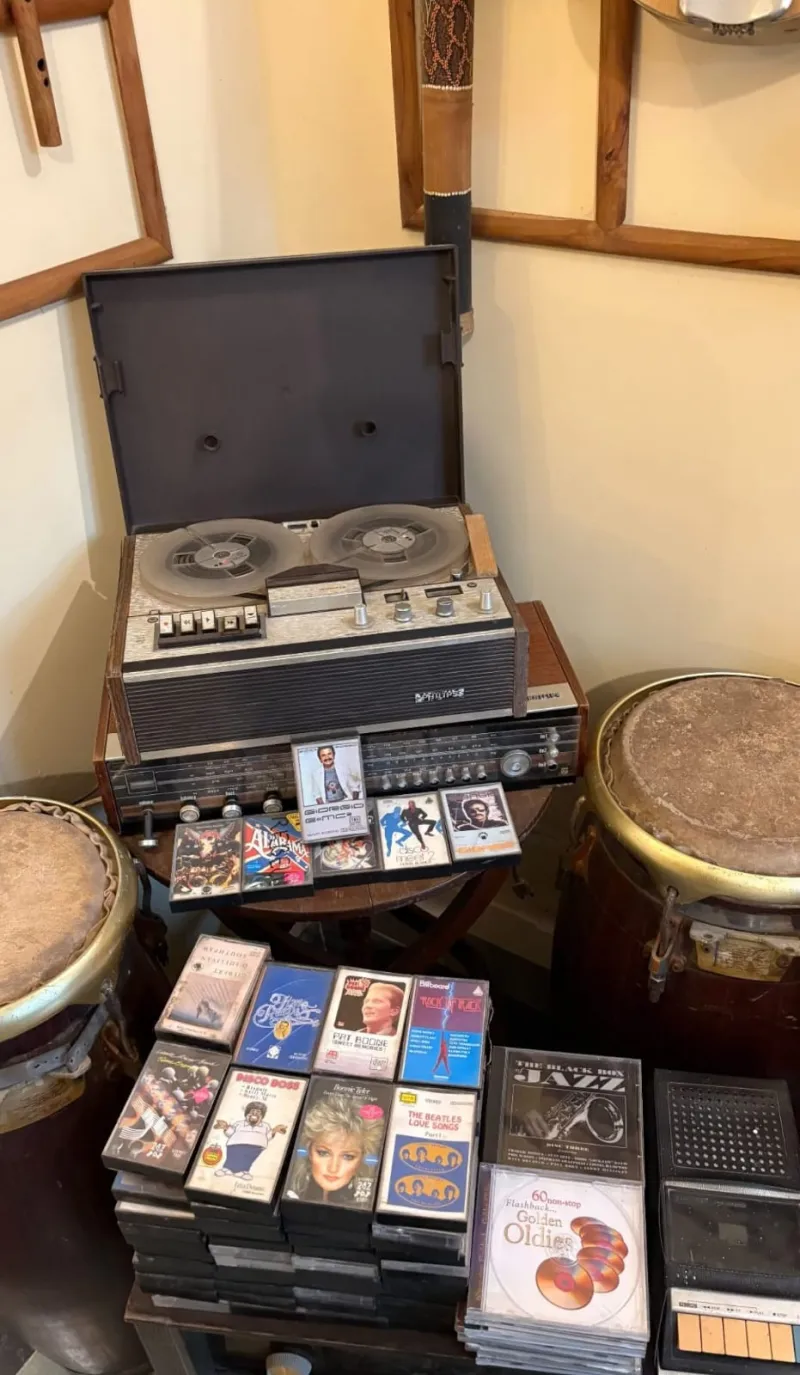
Photo: Himesh23, CC BY-SA 4.0, via Wikimedia Commons
There's a particular kind of person who hears a recording of rain falling on a corrugated tin roof somewhere in 1962 rural Georgia and immediately thinks: that's the snare. These people are multiplying. And honestly? Good.
Over the past few years, a loose but growing community of independent musicians, producers, and sonic weirdos has been quietly raiding the world's forgotten audio archives — pulling source material from places like the Smithsonian Folkways collection, the Library of Congress's American Folklife Center, and increasingly, cardboard boxes at estate sales in places like Akron and Baton Rouge — to build music that sounds like nothing else currently cluttering your Spotify release radar.
This isn't sampling in the traditional sense. It's something stranger, more obsessive, and honestly more interesting.
The Archive Is the Instrument
Field recordings were never meant to be music. A researcher capturing the ambient noise of a Cajun fishing village in 1955, or a linguist preserving the cadence of a dying dialect somewhere in Appalachia — they were doing documentation work. Preservation, not production. The idea that someone might one day chop those recordings into a beat, layer them under synthesizer drones, or use them as the textural backbone of an entire album would have seemed absurd.
And yet here we are.
Artists like Arca, Grouper, and William Basinski have long played in adjacent territory — treating found audio and degraded tape as compositional material — but what's shifted recently is who's doing it and how accessible the archives have become. The Smithsonian Folkways catalog alone contains over 3,000 albums worth of material, and large chunks of it are freely streamable. The Internet Archive hosts thousands of hours of field recordings that were digitized from collections most people have never heard of. Suddenly, the raw material for something genuinely new is sitting there, completely free, waiting for someone with enough curiosity and a decent pair of headphones.
Estate Sale Audio and the Thrill of the Unknown
The digital archive is only part of the story. A significant chunk of the community's most prized source material comes from physical media — specifically the kind of cassette tapes and reel-to-reel recordings that end up in estate sales, thrift stores, and Goodwill bins because nobody knows what to do with them.
This is where things get genuinely cinematic. Imagine buying a shoebox of unlabeled cassettes for three dollars and discovering someone's home recordings of a backyard thunderstorm in rural Kansas from 1983, complete with a dog barking somewhere in the distance and what sounds like a screen door slamming shut. That's not just atmospheric texture — that's a time capsule. And in the hands of the right producer, it becomes something that carries an emotional weight no synthesizer preset could ever fake.
There's a whole informal network of people who do this now. Forums, Discord servers, niche subreddits — communities built around trading discoveries, sharing digitization techniques, and debating the ethics of using recordings that might have belonged to someone's grandmother. That last part matters more than it might seem. The conversation around provenance and consent is ongoing, and the more thoughtful artists in this space are genuinely wrestling with it.
Why This and Why Now
It's worth asking what's driving this particular obsession at this particular moment. Part of the answer is practical: sample-based hip-hop, which dominated the cultural conversation around found audio for decades, has become increasingly expensive and legally treacherous. Clearing a sample from a recognizable record can cost more than an independent artist's entire recording budget. Field recordings from expired copyright holdings, or material released under Creative Commons licenses, sidestep all of that.
But the deeper answer is aesthetic and almost philosophical. A lot of the musicians drawn to this practice talk about wanting to make music that feels located — rooted in a specific place and time in a way that purely synthesized or digitally produced music often isn't. There's a texture to a real acoustic environment that you can't convincingly fake, a kind of sonic fingerprint that tells you something actually happened somewhere. In an era when so much music sounds like it was assembled in a vacuum, that specificity is genuinely radical.
It's also, if we're being honest, a reaction to the algorithmic homogenization of music discovery. If the platform's recommendation engine is designed to serve you more of what you already like, then the most interesting counter-move is to build from source material the algorithm has never indexed. You can't train a model on a cassette tape someone found at a church sale in Tuscaloosa.
The Artists Actually Doing This
Without turning this into a listicle — because we're better than that — there are a handful of artists worth knowing about if you want to hear where this practice is landing right now.
Producers working under monikers that deliberately obscure their identities are releasing music on Bandcamp that layers Folkways recordings of work songs and field hollers under slow, meditative electronic compositions. The results feel less like albums and more like excavations. Some of it is genuinely haunting. Some of it is a little too precious. But the best of it has a weight that's hard to shake.
There are also artists doing something more kinetic with the material — chopping field recordings into rhythmic loops, pitching them into melodic phrases, treating them with the same irreverence a hip-hop producer might bring to a James Brown break. The texture is different but the energy is there. A recording of a steel mill from 1947 can absolutely bang if you know what you're doing.
The Ethics of the Dig
Here's the part nobody wants to sit with but everyone probably should: a lot of these recordings were made by researchers studying communities — often Black, Indigenous, or rural working-class communities — that didn't necessarily understand how their voices and environments might be used. The Smithsonian Folkways catalog is incredible, but it's also a product of an era when the people doing the recording held considerably more institutional power than the people being recorded.
The artists doing the most interesting work in this space are the ones thinking about this openly. Crediting sources. Contextualizing the material. Asking what it means to build something new from a sound someone else made, in a place they lived, during a moment they didn't know anyone was preserving. It doesn't have to be paralyzing — but it does have to be part of the conversation.
The Frequency You Didn't Know Existed
What makes this whole movement feel genuinely alive — as opposed to just academically interesting — is that the people doing it are clearly having fun. There's a collector's joy to it, the same dopamine hit you get from flipping records or finding a weird paperback at a used bookstore. The archive is a place to get lost in, and getting lost in it turns out to be a pretty great way to find something nobody else has.
In a musical landscape that sometimes feels like it's running out of new combinations, the idea that you could build something completely original from a recording nobody's touched in sixty years is genuinely exciting. The sounds are out there. They've been sitting in boxes and on servers and in the stacks of institutions that weren't sure what to do with them.
Someone's going to find them and make something weird and beautiful.
That someone might already be your next favorite artist.