Closet Sessions: How the Bedroom Studio Became America's Most Radical Recording Space
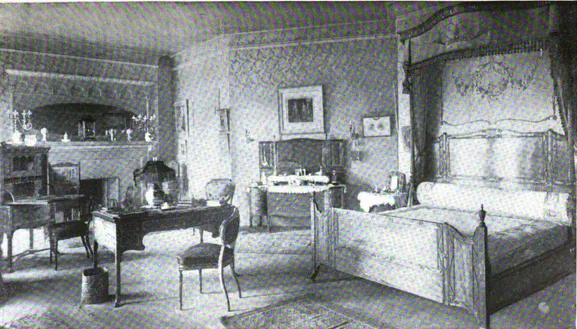
Photo: F.A. Munsey, editor, Public domain, via Wikimedia Commons
There's a running joke in certain corners of music Twitter that the most expensive piece of gear in a bedroom studio is the rent. And honestly? The joke lands because it's true — and because it doesn't seem to be stopping anyone.
Something genuinely strange and exciting is happening in the DIY recording world right now. Not strange like "oh cool, lo-fi is trending again" — strange like a fundamental restructuring of what it means to make a record. The bedroom studio, long treated as a stepping stone to the real thing, has quietly become the destination itself. And the artists building their entire sonic identities inside 400-square-foot apartments aren't apologizing for it. They're leaning all the way in.
The Room Is the Instrument
Ask any classically trained audio engineer about recording in a bedroom and they'll give you a list of problems longer than a Spotify playlist. Flutter echo. Bass buildup in corners. HVAC noise bleeding into vocal takes. Reflective surfaces turning your snare into a tin can rattling in a bathroom. All real. All technically valid.
Also: all increasingly irrelevant to a generation of producers who've decided that the room is the instrument.
Producers like Mannequin Pussy's Marisa Dabice, or the entire extended universe of artists orbiting the DIY scene in cities like Philadelphia, Chicago, and Los Angeles, have been building records in unconventional spaces for years. But something shifted in the post-pandemic moment. The constraint stopped being a limitation to work around and started being a sound to actively pursue. The bedroom isn't a compromise. It's a vibe. It's a frequency. It's a choice.
Take the acoustic hack that's basically become a rite of passage in DIY circles: recording vocals inside a closet full of clothes. Hanging fabric is a genuinely effective diffuser — it breaks up reflections without killing the room's natural warmth. It costs zero dollars. And it produces a vocal sound that's intimate in a way no professionally treated vocal booth quite replicates. There's a reason so many records that feel like someone is whispering directly into your nervous system were made exactly this way.
The Gear List That Would Make a Vintage Dealer Cry
The gear conversation in bedroom production has gotten genuinely interesting. Not because everyone's spending thousands on boutique preamps — but because they're not, and the results are increasingly indistinguishable from records that did.
The interface-and-laptop combo that defined the early 2010s bedroom producer aesthetic has evolved into something weirder and more intentional. Artists are pairing budget audio interfaces (Focusrite Scarlett series, Universal Audio Volt) with software that's either free or criminally cheap — REAPER, which costs $60 and is used professionally by people who simply don't want to pay Pro Tools tax, has become a genuine cult object. Plug-ins that simulate analog saturation and tape warmth (Tape Cassette 2, anyone?) are doing genuinely convincing work.
But the more interesting development is what's happening outside the computer. A lot of the bedroom producers making the most textured, layered work right now are running signal chains that would look insane on paper. Cheap microphones through broken preamps. Guitar pedals used as insert effects on vocals. Cassette decks patched into the signal path specifically to degrade the audio in ways that feel human rather than clinical. This isn't accidental. It's a philosophy.
The philosophy, roughly: if a professional studio's entire value proposition is sonic cleanliness and technical perfection, then the bedroom studio's competitive advantage is everything else. Grit. Accident. Character. The sound of a space that has a history.
Constraints as Creative Engine
Here's the thing that the discourse around bedroom recording usually misses: limitation is not the enemy of creativity. It's frequently the engine of it.
Jack White has talked about this for decades — the idea that putting restrictions on yourself forces you to solve problems in ways you never would have if you had infinite resources. The bedroom producer lives this every single day. You can't afford to book another session, so you figure out how to get the take right the first time. You can't fix it in mix because your mix chain is three plug-ins and a prayer, so you make it right at the source. You can't layer forty tracks because your laptop starts sounding like a jet engine, so you learn to do more with less.
The sonic results of these constraints are all over what's been charting and trending in the past few years. The blown-out, almost uncomfortably close vocal production on records by artists like Ethel Cain, Wednesday, or the entire current wave of indie folk coming out of the South and Midwest — a lot of that intimacy isn't a production choice made in a $3,000-a-day studio. It's the sound of someone figuring it out in real time, in a room that was never supposed to be a studio, and accidentally creating something irreplaceable.
The Cult Following Equation
There's also a community dimension to the bedroom studio renaissance that doesn't get talked about enough. When an artist makes something in their apartment and shares it directly — on Bandcamp, on SoundCloud, on a Discord server with 800 members who found them through a TikTok that got 200 views — the relationship between creator and listener is fundamentally different from the major label pipeline.
The listener knows. They can hear it in the record. And that knowledge creates a specific kind of loyalty that no amount of professional production polish can manufacture. You're not just buying the music. You're buying into the story of someone making something real in an unreal situation.
Artists like Lush (the project of Shawn Roggenkamp), or the sprawling DIY ecosystem around labels like Run for Cover and Count Your Lucky Stars, have built audiences that would make major label A&R people genuinely nervous — not because of the numbers, but because of the depth of engagement. These listeners aren't passive consumers. They're participants in a shared aesthetic project.
What the Professional Studio Actually Sells Now
None of this means professional studios are dead. They're not. But their value proposition has shifted in ways the industry is still working out.
What a great studio sells now isn't access to better sound — it's access to specific rooms with specific histories, to engineers with specific relationships to specific gear, to the intangible thing that happens when a band plays together in a live room that was designed for exactly that purpose. Those things are real and valuable. They're just not the only path to a great record anymore.
And for a generation of artists who grew up understanding that the gatekeepers were optional, that's a pretty liberating realization.
The bedroom studio isn't a consolation prize. It's a whole different game. One where the rules were written in a closet full of winter coats at two in the morning, with a laptop fan whirring in the background, and it sounded exactly right.