Be Kind, Rewind, Repeat: A Road Trip Through America's Stubbornest Video Stores
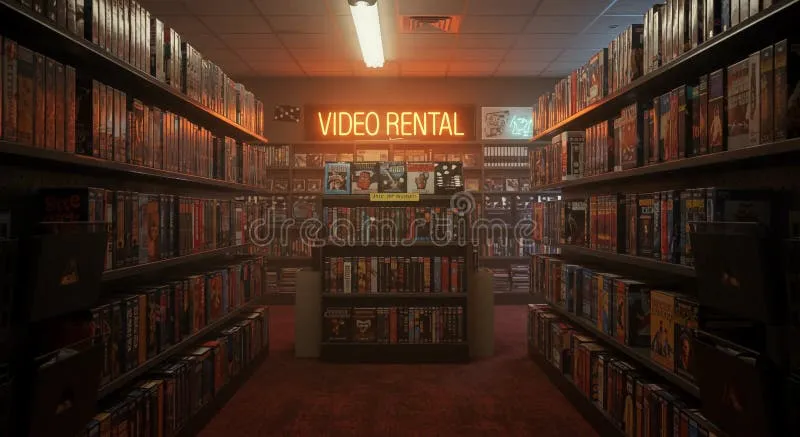
Photo: retro video rental store shelves VHS interior, via thumbs.dreamstime.com
The first thing you notice at Scarecrow Video in Seattle is the scale. It's not a store; it's a weather system. Over 145,000 titles, they say — one of the largest publicly accessible film collections on Earth, sitting in a low-slung building in the U District, staffed by people who can locate a 1987 Hungarian animated feature from memory.
The second thing you notice is that people under 25 keep walking in the door.
That's the part nobody predicted. Blockbuster is down to one Bend, Oregon location, a living monument to late fees and corded phones. The chains are gone. And yet across the country, independent video rental isn't just surviving — in a handful of cities, it's growing. New shops have opened in Los Angeles, Portland, Chicago, and Brooklyn within the last few years. Some are in basements. One operates out of the back of a bar. Membership numbers, where stores share them, are trending up, not down.
The Cult of the Clerk
Every great video store has a clerical class — in both senses of the word. These are the people whose recommendations were the original algorithm, except the algorithm had taste, trauma, and opinions about the lesser works of Brian De Palma.
At Vidiots in LA, which closed in 2017 and — plot twist — reopened in 2023 bigger than before, the staff picks shelf functions like a mixtape. At Filmbar-adjacent shops and one-room operations in towns you'd drive through without blinking, the clerk is curator, projectionist, and unpaid therapist for anyone who just watched something that wrecked them.
And here's the generational kicker: a lot of these clerks are Gen Z, renting movies the way their parents did, for reasons their parents didn't see coming. "I never experienced the golden age," one 23-year-old employee told me, reshelving a tape. "So this is new to me. Every movie here is a choice somebody made. Netflix feels like weather. This feels like a person."
VHS Is the New Vinyl
The physical media revival has a hierarchy, and video stores sit at the top of it because they're not just selling objects — they're lending access. You can't rent a streaming license. You can rent a tape.
And the tapes! The deep shelves of these stores are where cinema's oddball inheritance lives: regional horror, soap-opera oddities, workout videos hosted by celebrities who should have known better, entire walls of titles that exist nowhere else in playable form. Collectors and archivists treat these places as what they technically are — archives with late fees. When a store closes, film historians genuinely panic, because a unique VHS of a lost regional slasher isn't nostalgia. It's often the only copy.
The stores know it. Several now partner with archives and universities. Others just quietly digitize what they can and keep the rest on the shelf, spine out, waiting.
Midnight Is the New Prime Time
What really separates the survivors from the memory pieces is that they've become venues. Screenings in the back room. Director Q&As. Themed marathons — a regional horror all-nighter, a New Year's Eve matinee of something so strange the flyer just says "trust us."
This is where the road-trip angle stops being cute and starts being true: these stores are functioning as the single-screen theaters and record shops of film culture, third places for people whose relationship with movies had been reduced to a thumbs-up button. You walk in wanting one thing and leave with three, plus a conversation, plus a flyer for a screening on Friday.
The Weird Math of Staying Open
Let's not romanticize the ledger. Rent is real. Tapes degrade. The business model of most of these stores is a braid of rentals, merchandise, donations, events, and in several cases nonprofit status — Scarecrow became a nonprofit specifically to survive, and it worked. Vidiots' revival was backed by people with money and sentiment in equal measure.
But the demand side is genuine, and it's young. Physical media sales have grown for years running. Blu-ray collectors, tape traders, and casual renters who miss choosing something are all feeding the same machine. The stores aren't ghosts; they're proof that convenience doesn't actually kill desire — it just buries it under a subscription.
So here's the assignment, Saturn Barnola readers: find your nearest surviving video store. Get a membership. Ask the clerk what's weird. Take home something you've never heard of, on a format older than you, and watch a stranger's taste change your night.
Be kind. Rewind. The store is open.